
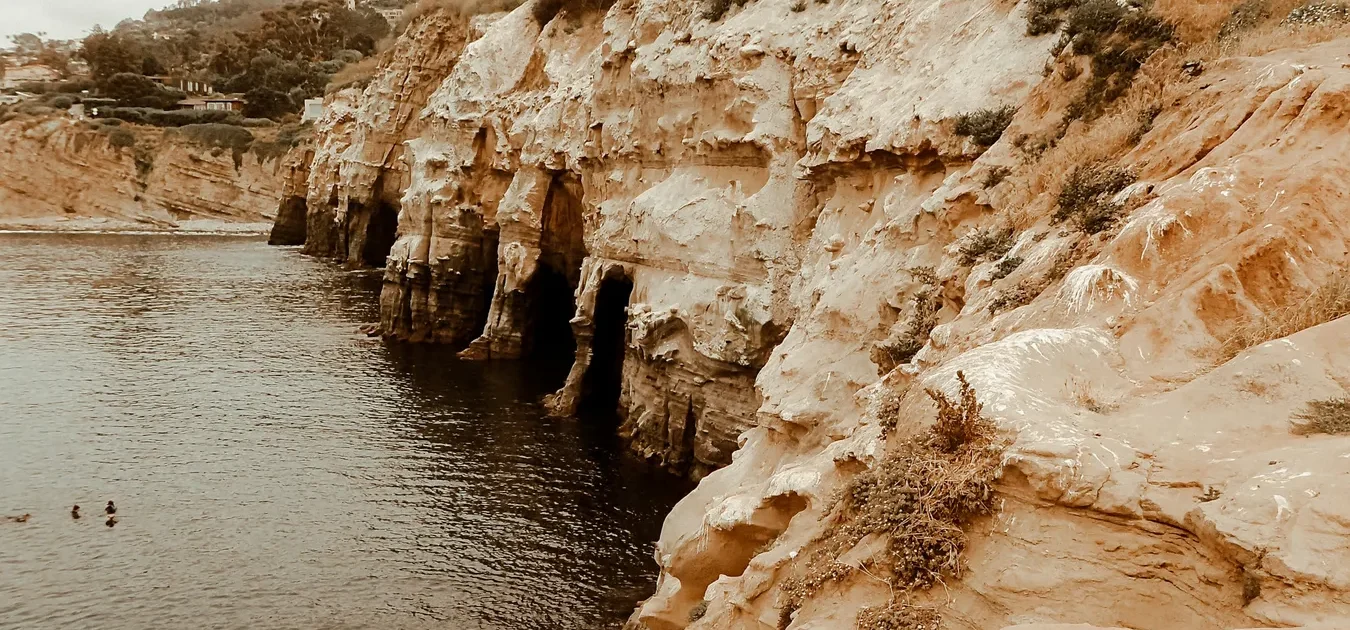
Outdoor San Diego is not one climate or surface. Coastal fog, sandstone, chaparral, exposed bluff, shaded canyon, dry trail, and developed park can sit within the same regional day. The visual closeness makes current conditions more important, not less.
Use an official access point
Begin with the responsible park or agency. Check closures, fire conditions, trail notices, tide or surf information where relevant, parking or transit instructions, and the time needed to return before dark. A social photograph is not access guidance.

Original La Jolla Sea Cave Kayak Tour for Two
The Original Sea Cave Kayak Tour (90 Minutes in Length) offers unforgettable guided tours through the La Jolla Ecological Reserve. Each tour is lead b...
Plan for the light you have
Marine layer can create cool, low-contrast morning conditions near the coast while another area clears. Bring layers and sun protection, and choose a route that remains worthwhile when the distant view is not available. Close geological form, plant structure, and canyon scale can be more revealing than a horizon.
Keep the return simple
- Stay on designated routes and respect barriers.
- Carry water appropriate to the plan.
- Do not improvise around cliffs, surf, wildlife, or closures.
- Confirm accessibility details rather than relying on “easy” labels.
- Leave enough energy and daylight for the return route.

Top Rated San Diego Sunset Sail Classic Yacht 6 Guests
Skip the crowded tour boats. Liberty carries just six guests and that changes everything. Sail San Diego Bay aboard...

San Diego Bay Jet Boat Ride
A boat ride on San Diego Bay is lovely, but an exhilarating ride on a dual-engine jet boat is an experience to remem...

San Diego Seal Tour
Hop aboard San Diego’s only amphibious Sea and Land Adventure for an unforgettable 1 hour and 45 minute tour that...
Original La Jolla Sea Cave Kayak Tour for Two
The Original Sea Cave Kayak Tour (90 Minutes in Length) offers unforgettable guided tours through the La Jolla Ecological Reserve. Each tour is lead b...
The deeper outdoor plan is often the less heroic one: accurate entrance, current condition, one clear objective, and time to observe without rushing.